SBTi targets achieved through a climate roadmap
A climate roadmap provides direction for strategic climate work and enables the modeling and achievement of real emission reductions in practice.
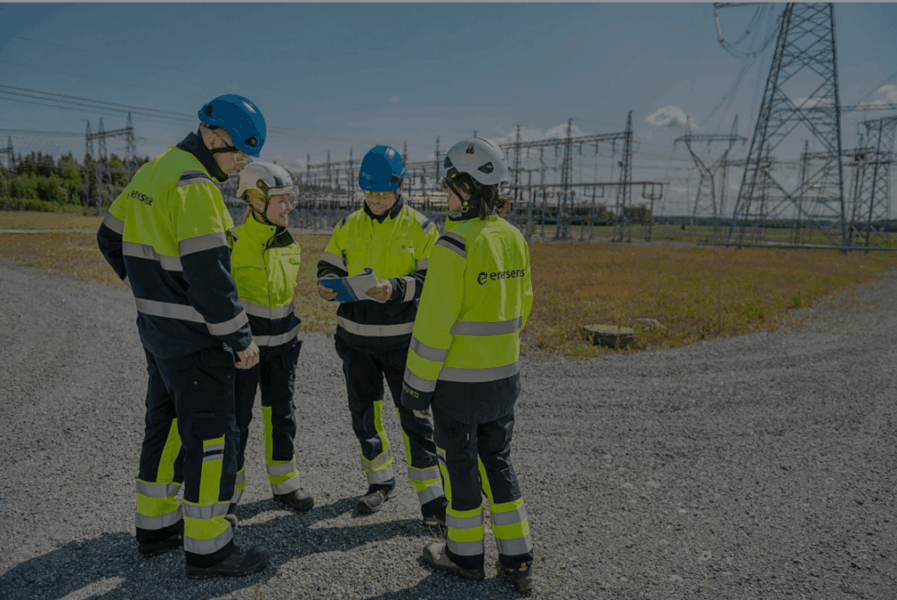
Situation
Enersense International Plc is a Finnish publicly listed company founded in 2005, acting as a lifecycle partner for its clients in energy transmission and production, the industrial energy transition, and telecommunications. The company builds and maintains critical infrastructure across the Nordic and Baltic regions and employs approximately 1 700 professionals.
Challenge
Enersense aimed to set science-based emission reduction targets (SBTi) that are both ambitious and practically achievable. To support this, a climate roadmap was developed to guide the process.
Solution
The work began by identifying the most significant emission sources. The majority of Enersense’s emissions originate from purchased materials and services, particularly steel, making emission reductions largely a supply chain-related challenge. As a result, achieving reductions does not depend solely on the company’s own actions, but also on supplier choices, market development, and the availability of new technologies.
Next, emission reduction measures were defined and prioritized based on their impact and feasibility. Emission reduction pathways were created for the measures, and the cost implications of key actions were assessed.
The climate roadmap demonstrated that market developments alone are not sufficient to achieve the SBTi targets. Instead, active decisions are required, such as increasing the use of low-carbon materials, strengthening supplier collaboration, and introducing new procurement criteria.
“Transitioning to low‑emission steel, electrifying the vehicle fleet, and engaging material and service suppliers in emission reduction efforts are the most critical means for achieving our climate targets. We have mapped numerous ways to ensure that investments in clean energy transition and telecommunications networks — as well as their operation and maintenance — can be carried out with lower emissions. We do not yet have all the solutions to reduce emissions, so we remain open to innovations and new operating models.”
Liisi Tamminen, Head of Communications, Investor Relations, and Sustainability, Enersense International Plc
Next steps
Through the climate roadmap project, Enersense was able to establish climate targets that were approved by the Science Based Targets initiative (SBTi). The company has committed to reducing its own operational emissions (scopes 1 and 2) by 63 % and its value chain emissions (scope 3) by 38 % by 2035, compared to the 2023 baseline.
A key measure identified was increasing the use of low-carbon and recycled steel. To improve the availability of low-carbon steel, Enersense launched a joint initiative with WWF aimed at accelerating investments in low-carbon steel production by creating strong demand signals. The impact is twofold: it supports Enersense’s own climate targets while also contributing to a broader industrial transition toward lower-emission steel production at a global scale.
Enersense’s case demonstrates that a climate roadmap delivers the greatest value when it is integrated into both strategy and day-to-day operations. By combining the current state, future scenarios, and the impacts of different measures, climate work becomes more structured, manageable, and predictable. At the same time, the company can clearly communicate its direction and choices to its stakeholders.
“We have set ambitious science‑based emission reduction targets, and achieving them requires strong expertise and concrete actions. Our goal is for investments in the clean energy transition and telecommunications networks to be carried out in the future with lower emissions than before. We are pleased to see that our customers are very interested in low‑emission alternatives.”
Liisi Tamminen, Head of Communications, Investor Relations, and Sustainability, Enersense International Plc
Results
SBTi
targets approved
-63 %
emission reduction target (v. 2035)
(scope 1 & 2)
-38 %
emission reduction target (v. 2035)
(scope 3)
DISCUSS WITH AN EXPERT
In a similar situation?
We’d be happy to tell you how to get started.
RELATED SERVICES

Climate roadmap & transition plan
Clear and actionable plan to translate climate targets into practice

SBTi commitment and targets
A credible, science-based climate target and commitment to reducing emissions

Partner engagement
Engaging partners in climate targets and emission reduction measures